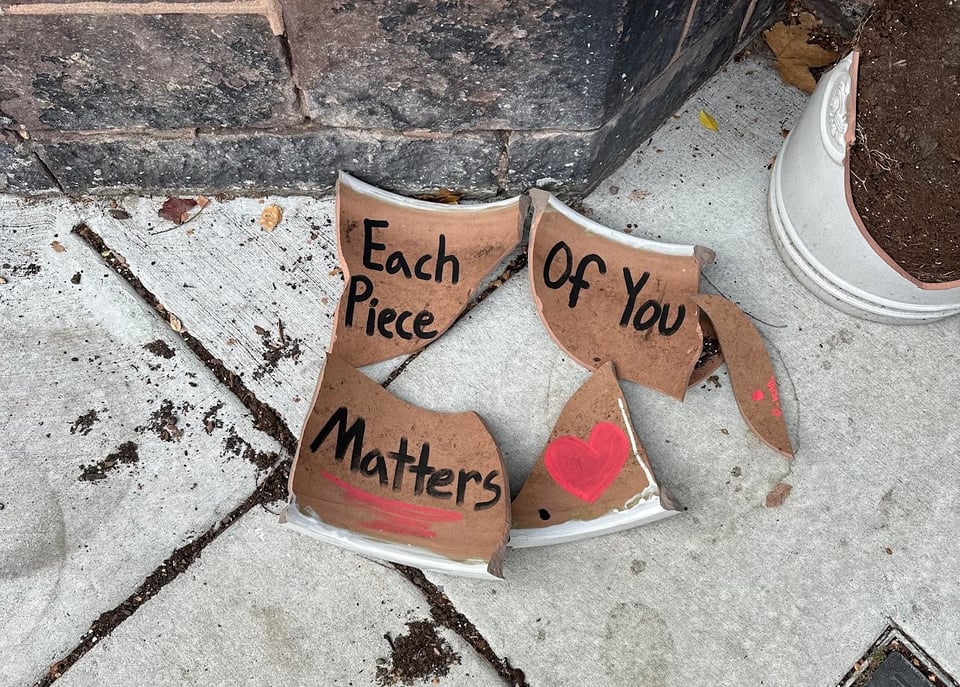
Happy 2025!
My family is happy and healthy. My first year in business has me cautiously optimistic. The Eagles are in the playoffs. And I look back fondly at 2024 and enter a new year full of uncertainty and energy.
A lot has happened since I last emailed and the length of this email is longer than I set out to write. So I’ve broken this up to be super skimmable. I write to share an update and, as always, share some things I’m thinking about in an effort to get some feedback from you, dear reader.
If any of this is interesting or you have thoughts, hit reply. Even if we’ve never spoken or met before!
I’m going to split this into three sections:
I. Personal updates. An update on career / business stuff
II. What I’m thinking about. Thoughts and predictions about the state of the internet, media, politics, and other things.
III. Future leanings. Areas I’m experimenting with and would love to talk to you about.
Here we go!
From a career perspective, 2024 contained three distinct phases. I spent the first year pushing a major campaign over the finish line at Crossbeam as VP of Content that included a brand new conference, best-selling book, website redesign, and the cherry on top of our category creation playbook cementing “Ecosystem-Led Growth” as an strategy adopted by revenue teams.
Then I planned my transition out as the company acquired Reveal. (I wrote about why I did that in detail here)
And lastly, in July, I entered the solopreneur phase I am in now. Here are some things I’ve done since.
Gate Check Studios. When I struck out to do “consulting” I didn’t really have a good idea of what it would look like or even what my goals were. I was running from something versus running to something. I needed a break from Zoom calls, managing, and navigating the company structure that comes with being a leadership member at a fast-growing startup. I had a creeping feeling my skills were atrophying, the internet was changing, and I just needed some space and time to figure it out.
I also had lots of Slack convos, email threads, and text message chains with various marketing leaders and I knew there were areas I could add value to various companies.
So I started Gate Check Studios as a banner to do this work.
I’ve learned so much, but some updates/learnings:
Surprisingly, I ended the year just barely exceeding my salary had I stayed at Crossbeam by 3%. I was expecting to take a 20-30% cut as I ramped up. This has given me the confidence to continue to bet on myself (thank you to my wife Allison for the space!). I even bowed out of a job interview process with a company I respect because I felt I still had more to explore here — which felt like a milestone of sorts. My 2025 goal is to beat my Crossbeam salary and bank the extra for the inevitable slow periods.
The thing most people reach out to me for is doing brand marketing via content, editorial, video, and events. With the macro climate, I had feared this stuff would get cut, but there are still companies investing here.
However, my offer still needs work. My current approach is essentially to get on the phone with a marketing leader, explore their pain points and suggest ways I can help via brand, content, events, operations, or strategy. I either tackle it as a one off project or a retainer as a fractional leader. That’s a bit too broad and a big 2025 goal will be to lock in on what I do and the kind of clients I want to work with.
With the help of 15 years’ experience, rolling my own AI tools (for organization, not creating content, mind you!) I work extremely quickly and deliver value much quicker than I would as a full-time employee with all the bureaucratic overhead. This has allowed me to nail the deadlines while still spending much more time with my children and take on some household projects and responsibilities that would have languished otherwise.
That said, I deeply miss being emotionally connected to the company and team I am working for. When you are a consultant, there can be some cognitive dissonance there. It’s for this reason that I am sure I will one day go back in-house or maybe even build a small team.
Started (And Slowing) Sabbatical. I started a newsletter and occasional video series about long-term career breaks. This was a fun and refreshing diversion from writing about B2B SaaS, however I’m going to be clearing out my remaining drafts and slowing down the work on Sabbatical. Some reasons:
The concept of the newsletter isn’t immediately appealing to most people. My framing is off. I know what it feels like to have “audience/niche fit”. I don’t have it. I still believe that people taking long-term breaks and considering their career in a non-linear way will continue to be a trend. This particular execution needs more work.
Personalities and individuals are the future “publishers” — doing this under a branded banner and not my name may not make sense here. I am reluctant to tie my online identity as the “sabbatical guy” right now.
Much of the experimentation I was doing on my own project I am able to do on behalf of clients.
Most people thought I was taking a sabbatical myself rather than working on a thing called Sabbatical. Not as important, but it factored into my decision.
Getting back the itch. At the end of my Crossbeam tenure my curiosity supplies were emptied. The combo of navigating COVID, becoming a dad (x2), and working at startup sprint speed had exhausted whatever cognitive energy supplies I had. For the record, I enjoyed the time and would do it again. But there's a time to hustle and there’s a time to rest.
When I created some space to explore or be entrepreneurial, I was initially a little despondent about how few ideas I had. I had a few dark nights where I realized I was entering middle age and maybe all of my interesting and creative ideas were behind me. Or that any creative “drive” I had was forever gone. That hustle, that feeling in my chest I get when I'm working on an idea that excites me may never come back. I might as well become a paper pusher at some giant company and call it a career. Father Time, after all, is undefeated.
Thankfully, it turns out I just needed more time and more inputs. I had been working with the same audience, using the same tools, in the same circumstances. It was like cooking with the same ingredients, and I needed to go back to the grocery store. I also needed to give myself some grace to not be defined by “the doing” all of the time.
As I spoke to more people, played with more tools, read more thoughtful writing, and gave myself time to breathe, the itch came back. Ironically it’s a theme I note in my Sabbatical writing: giving oneself the time to create the space in which new ideas can enter.
AI tools. I don’t want to look back at this time during this historic platform shift and realize I should have been more ambitious and experimental. I’ve been an AI maximalist when it comes to improving my ability to be a one-person business. Some fun projects:
Using Tana (thanks Ryan Baum!) I’ve created a custom call agent that recognizes the client I am speaking with and organizes my notes accordingly. It’s been a game changer for the context switching that comes with juggling multiple projects.
My notes were all over the place, so naturally I turned to AI to solve them. Using Replit, I created Savesies (named after the Philadelphia practice of saving your parking spot with cones). Savesies is a del.icio.us-like tool that I’ve used to gather my notes and bookmarks on the various things I'm following, caches their contents, and allows me to ask an AI agent about the content of my bookmarks. Being able to edit software using a prompt to bend to my personal tastes has been revelatory, like learning how to make my own furniture.
Creating an “editing bot” with ChatGPT that offers suggestions on how to improve the copy. It, admittedly, needs some work but it at least catches typos and easy grammatical errors.
Health stuff. I also took this time to get my health in order. Several males in my family passed away before 55, often due to heart issues. I got aggressive plaque scans, ECGs, and developed a relationship with a preemptive cardiologist. One of the beautiful aspects of living in Philadelphia is access to the world-class Penn hospital system here!
The atomization of everything. Probably the thought I return to the most is that the media environment continues to smash everything into smaller and smaller pieces. The teams creating content are smaller and the audiences are smaller. Some reasons for this:
Distribution. SEO is being replaced by the AI prompt. All of the social platforms are moving from a social graph (“I’m following a person”) to an algorithmic one (“I was served this content out of any larger context”) As a result, it’s nearly impossible to reach new audiences at scale. You may have noticed that a press tour in 2025 is no longer a handful of late night talk shows. It is going on dozens of podcasts. See Timothy Chalemets campaign for “A Complete Unknown”
The primary constraint for creating in 2025 is not talent, or tech, or creativity: it’s distribution.
Tooling. The productivity gains of AI are mostly going to the empowered individual.
Niches are vibes now. Audiences don’t just want to follow a topic they are interested in they want the passive vibes from the person via only kind of paying attention to their podcast or occasionally seeing their videos on short-form video sites. (It’s the same reason Netflix shows are designed for you to only sorta pay attention with scripts that constantly repeat the plot points. We want media we can hang out with, not necessarily engage with actively.)
Institutional distrust. Two factors at play here:
The ever-decaying trust that Americans have of every institution at every level.
A generation is coming of age raised on creatives, influencers, and Twitch streamers who, candidly, often have extremely low amounts of media literacy.
What does AI-native media look like? With every platform shift comes a new generation of media companies. Buzzfeed, for example, was uniquely born during the social media shift. It sounds passé now, but the fact that they A/B tested headlines on various platforms and wrote things with virality in mind was a big deal at the time. (Remember the 2014 New York Times innovation report?)
Most people think our news will be written by AI bots. Maybe. But what if the AI-native news sites…:
…took advantage of the flattening of the UI into a single chat box?
…allowed a single journalist or editor to extend themselves to AI avatars, AI produced podcasts, using AI tools that find stories within large and complicated data sets, etc.
…restarted the open web, because of the 10,000 AI-created bespoke tools and apps now available to distribute content to, rather than the same four or five?
Or what if “AI-native media” is some anachronism like “horseless carriage” and this is all an exercise in futility?
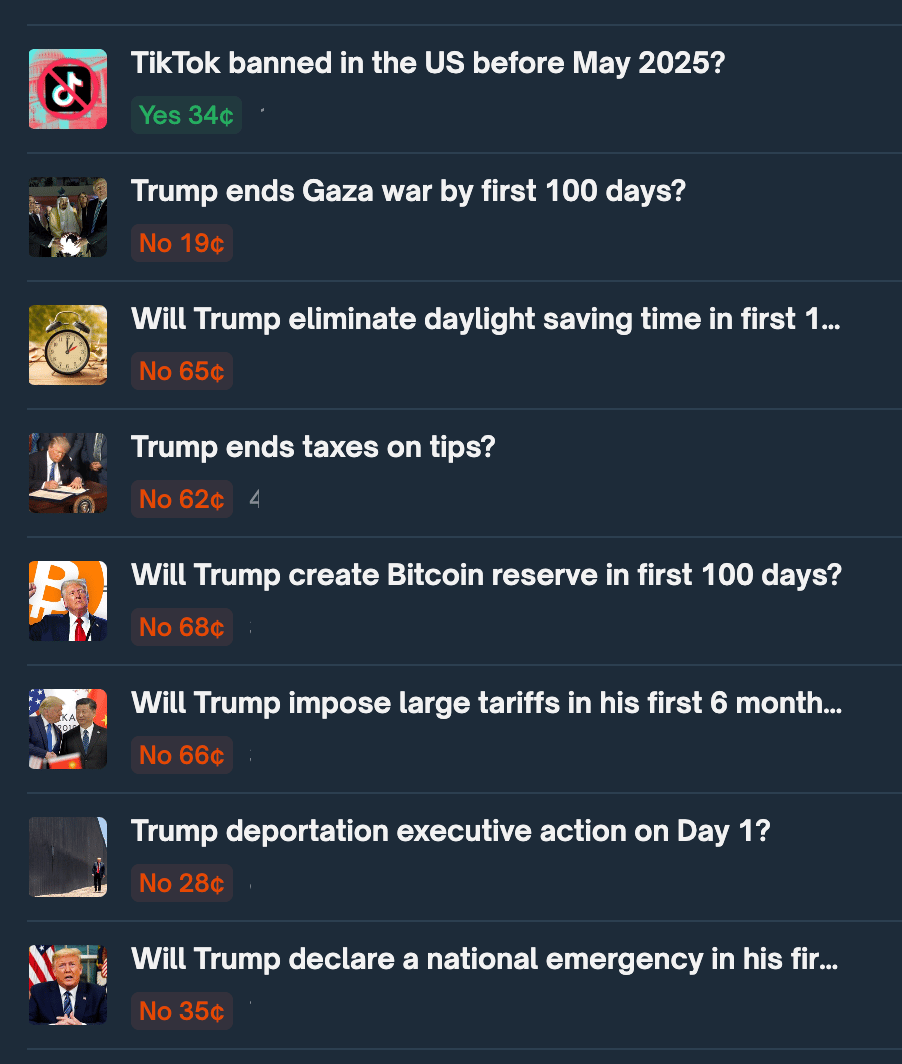
Polymarket. A criticism I’ve had of the anti-media types is that if you followed the chain of information they were sharing it often began because some journalist at a “mainstream” media outlet reported something. Polymarket flipped that for me.
Tracking Polymarket during news cycles has been the best way to track the news. During the election, Polymarket was a more reliable indicator of actual sentiment than the polls. Not Boring’s Packy McCormick (and the only newsletter to publish a picture of me with a Sam Hinkie sign in it) even has an AI-created podcast using Polymarket as the source.
I check it nearly every day, and I wonder how long it will take before there are independent journalists that “cover” the betting markets the same way people at Bloomberg cover, say, the commodities markets.
Polymarket has also oddly provided me with an outlet when the recent election didn’t go in my preferred direction. Which leads me to…
Shorting Donald Trump. It’s controversial to say in tech circles, but one of my (contrarian?) takes is that our incoming president will not lead to some unlock of progress or deregulation. Before, my belief that he’s a poor executive would be resigned to conversations at the bar. Now, I just shut up and count my money on Polymarket as I bet the opposite of whatever he says he’ll do.
Is crypto for real this time? During the first crypto boom in 2021 I became fascinated with NFTs and how they created scarcity in a digital context especially for writers. Turns out, they really didn’t (at the time, most NFTs just pointed to a URL kept on on some server). But I remain intrigued by the possibilities here for media and publishing. I love the ideas of decentralization and the open web that underpin many crypto projects. A future where everyone has a crypto wallet that can be used to frictionlessly subscribe or purchase things is very good for media. That future is closer than in 2021, but it’s not here yet.
call the 2007 journalism bloggers - WE FINALLY HAVE MICROPAYMENTS https://t.co/5qbSqf1HZq
— Sean Blanda (@SeanBlanda) December 20, 2024
The normie gap. In early Web 1.0 days in the late 90s, there were scores of freelancers and agencies that would sell businesses the importance of having a website and taking the Internet seriously. They’d charge someone some crazy fee and essentially whip something up in some WYSIWYG tool like FrontPage or Dreamweaver. They were taking advantage of the education gap: the tools for easy website creation had arrived, but not everyone knew.
And thus goes AI. Those on the bleeding edge are already creating teams of agents to execute tasks that would take humans hours and charging as if humans are still doing those tasks. Or they are posting content to platforms like Facebook for engagement to an unwitting public. We are in a moment where there is immense money to be made selling services that AI can do to people who don’t know (or don’t care) that the job is being done by a machine.
Quiet quitting social media and online life and focusing more on IRL. Amongst my peer group and friends, many have faded from social media and any online presence. A few factors here:
Age and life stage. There comes a point where posting your brunch photos is cringe.
Platform decay. I know several people who had large audiences on Twitter pre-Elon Musk or organic traffic referrals that just don’t have it in them to build it back up after the shift in the various algorithms.
Creator burnout. For those that rely on social media presence for work or business, there's always someone willing to do that sponsor deal for less money. And soon there will be AI avatars ready to “take” the job. And the demand for posting all the time is exhausting.
The collapse of SaaS. A large percentage of what we consider a “tech worker” are the support staff for software companies. People that are in support, or human resources, or customer support, or (*gulp*) marketing. In a world where a dumb ol’ liberal arts major like myself can build his own tools, why am I paying a monthly fee for some SaaS tool? Much like the tractor made farming more efficient and sent a bunch of labor out of the agriculture business, will AI have a similar impact on SaaS?
@christophergeorgewink Tech jobs make up the highest ever share of overall layoffs in the American economy #techtok #techjobs #economy
♬ original sound - Chris Wink
The dead internet theory’s effects on advertising. One of the forms of distribution that is working is partnering with “UGC” creators to advertise whatever is you want to share. (One of the more corrupt aspects of the internet is creators being paid and not disclosing it.) That alpha is quickly shrinking as more people catch on, yes. But further there are now full blown AI tools that will make fake creators that can say whatever you want however you’d like. Here’s one below:
This is one of the negatives of losing the social graph (see “distribution” above). I am no longer building trust with an individual creative over time. I am instead seeing “normal” people inserted into my feed and recommending a product and assuming that it is organic. Because of the audience's distrust in institutions and brands, this is working. But eventually audiences will stop responding to these things. And a lot of marketers are going to freak out when this happens.
A pause on cynicism. The backlash against tech and media is, in many, cases deserved. But we’ve swung a bit too far and much of the discussion around the state of these industries, and often the country as a whole, is steeped in contempt and cynicism. But I can no longer abide the knee-jerk “mainstream media bad” or “Elon Musk evil” or “America is doomed.”
(In fact, America is crushing it right now!)
As I think about the next decade of my life — I find it difficult to give attention to cynics or to reactionaries. I want things to change and to improve. My overriding politics are that we should build and make new things. And I don’t want to be scared.
I thought that six months in, I would have triumphantly arrived at my next phase. Dear reader, I don’t think that’s how this works.
But here are some things I’m exploring in the first half of 2025:
In the age of AI, how effective can one person be? I will continue to work with clients, but I have a hard cap on the number I’m willing to take on. What would it look like to “scale” me as much as possible? Is there a future where my “coworkers” are agents I train for specific tasks? Can I use tools like Replit to create 100 mini-products for my business?
(And if I can do this, can’t everyone?)
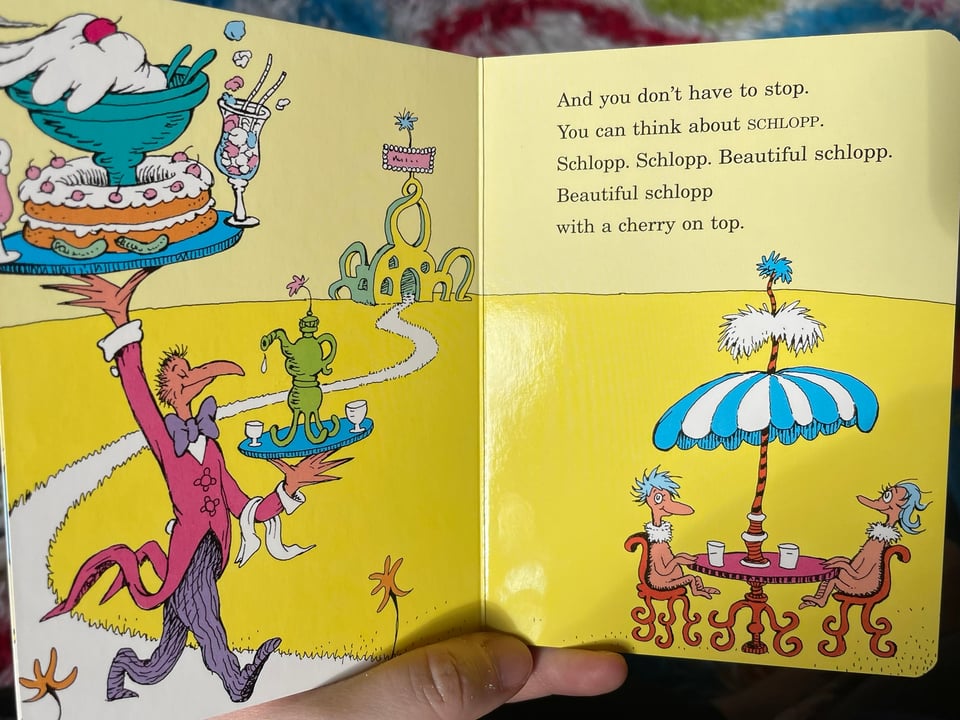
Humanity over slop. With discovery broken and flooded by ads and AI “slop” will people crave the human touch again? I’m betting yes, and that’s the work I'm advocating for on behalf of clients and taking on in my own projects.
B2B content marketing disentangled from brands. As software companies cut their content programs there is green space for independent B2B media companies again. Impatient companies will funnel sponsor dollars to these independent brands as their own efforts stall. I think there is opportunity here.
Getting back to creation. Dialing back my research and exploration in the name of shipping stuff.
_
If you’ve made it this far, you are a true pal. Thanks for reading, and send me your year-end reviews! I love reading them.
With love from Philadelphia,
Sean